
Better Plan, No Bans
Your Best Energy Value
By pairing the lowest-cost energy available today with the proven performance New Yorkers depend on, natural gas delivers exceptional long-term value. But value means so much more than just cost. Explore the many – often unexpected – ways natural gas adds value to your life and New York’s energy system.
Delivering Value Across New York
Keeping Homes Comfortable
Nearly 90% of homes in Western New York rely on natural gas every day for space heating, hot water, cooking, and other essential needs. Across the U.S., the average home saves $1,030 a year when they use natural gas as compared to using electricity to fuel home energy needs.
Keeping New York Running
About half of New York State’s electricity comes from natural gas – far more than any other energy source. When you flip on a light switch, there’s a good chance that electricity was generated using natural gas.
Powering Industrial Productivity
Natural gas powers the high-temperature industrial processes used to make everything from food and pharmaceuticals to steel, glass, paper, and chemicals. About 42% of all industrial energy used in the U.S. comes from natural gas.
Serving Essential Services
Hospitals, schools, businesses, and other essential facilities rely on dependable energy every day. National Fuel’s system delivers 99.99% reliability to customers across Western New York.
Natural gas does much more than heat homes. It helps power the systems, services, and industries New Yorkers rely on every day.
That’s why natural gas remains an essential part of New York’s energy future — helping provide the reliability, resiliency, and value needed to support homes, businesses, and communities across the state.
The breakdown below takes a closer look at what’s required to deliver that energy to homes and businesses across Western New York.
What’s Driving Your Energy Bill
If your energy bill feels higher than expected lately, you’re not alone. The cost of natural gas is rising due to increased demand competing for a restricted supply. If affordability is the goal, expanding pipeline capacity is one of the most effective ways to lower customer bills.
Utilities don’t mark up gas supply costs. They pass them along to the customer dollar for dollar. Taxes and other state-mandated programs wrapped into delivery fees also impact the total you see in your bill.
Taking a closer look at how the different pieces of a utility bill fit together can help you understand what’s really driving energy costs in New York.
The Cost of Natural Gas
What to Know
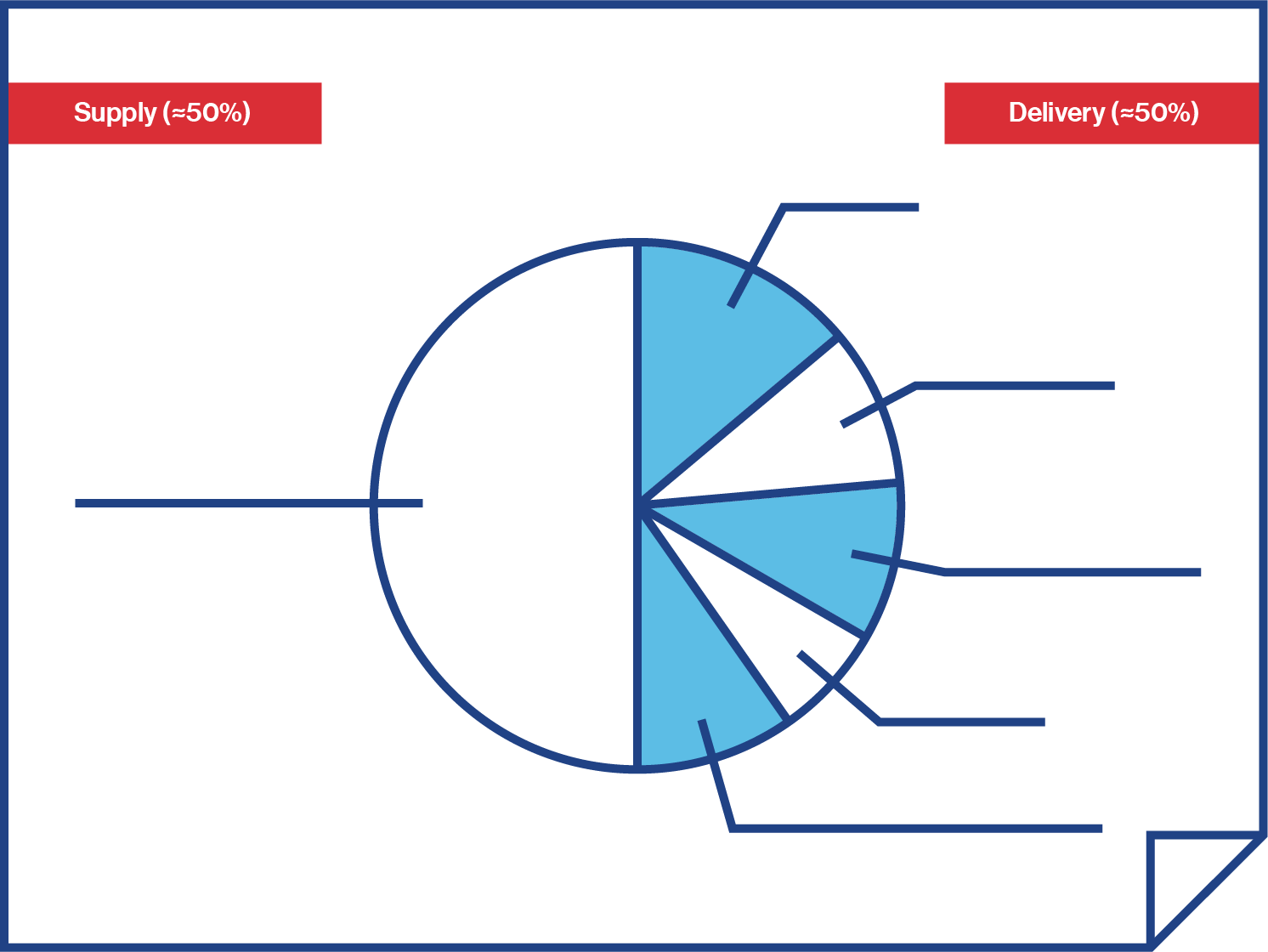
- ~50% of your bill is the cost of natural gas itself.
- This cost fluctuates based on market supply and demand.
- Demand can rise during cold weather or periods of high electricity use.
- Utilities don’t profit from this cost—it’s passed directly to customers.
The Cost to Deliver Energy
What to Know
- ~15% Infrastructure:
Using and maintaining a 10,000-mile natural gas distribution system. - ~10% Labor & Operations:
Employing skilled local workers who operate and maintain the system. - ~10% Taxes & Government Fees:
Property, sales, and other taxes. - ~5% State Programs:
Mandated programs such as those for energy efficiency. - ~10% Interest & Return on Investment:
Financing costs related to the $1 billion system investment.
The Public Service Commission regulates how much profit utilities can earn. For National Fuel, that amounts to about 7 cents for every dollar billed.
National Fuel also invests more than $100 million each year to maintain and modernize its natural gas system so it can safely and reliably serve customers through harsh Western New York winters. From time to time, those investments require adjustments to delivery rates. National Fuel has sought an increase in its delivery rates just twice over the last 18 years and has the lowest rates in all of New York State.
Energy costs are influenced by a number of factors, from supply and demand to public policy decisions. While utilities are responsible for delivering energy safely and reliably, many of the costs that make up your bill are shaped by broader forces. That’s why understanding what’s in your bill matters. It provides a clearer, more complete picture of where your energy dollars go.